
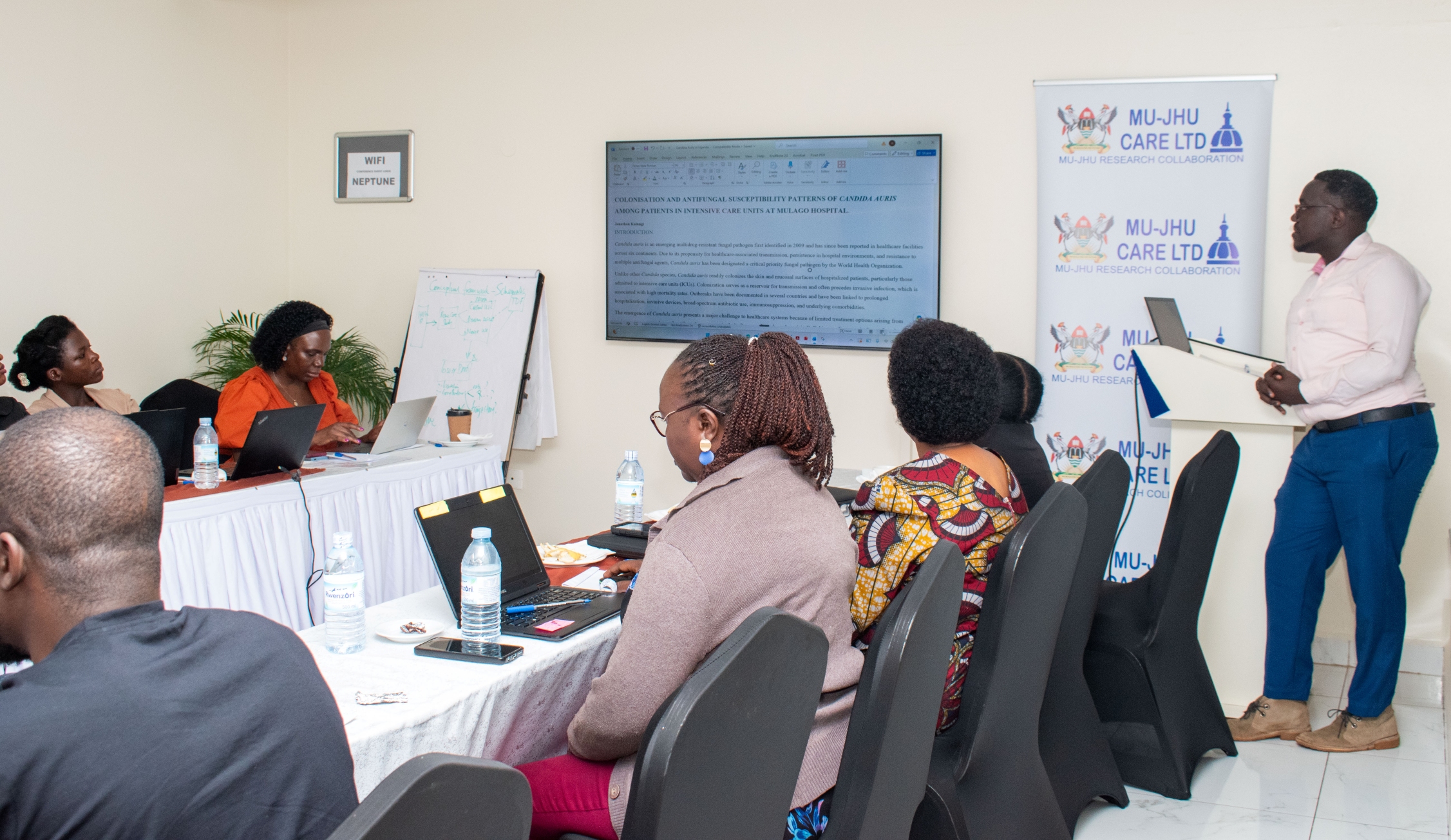
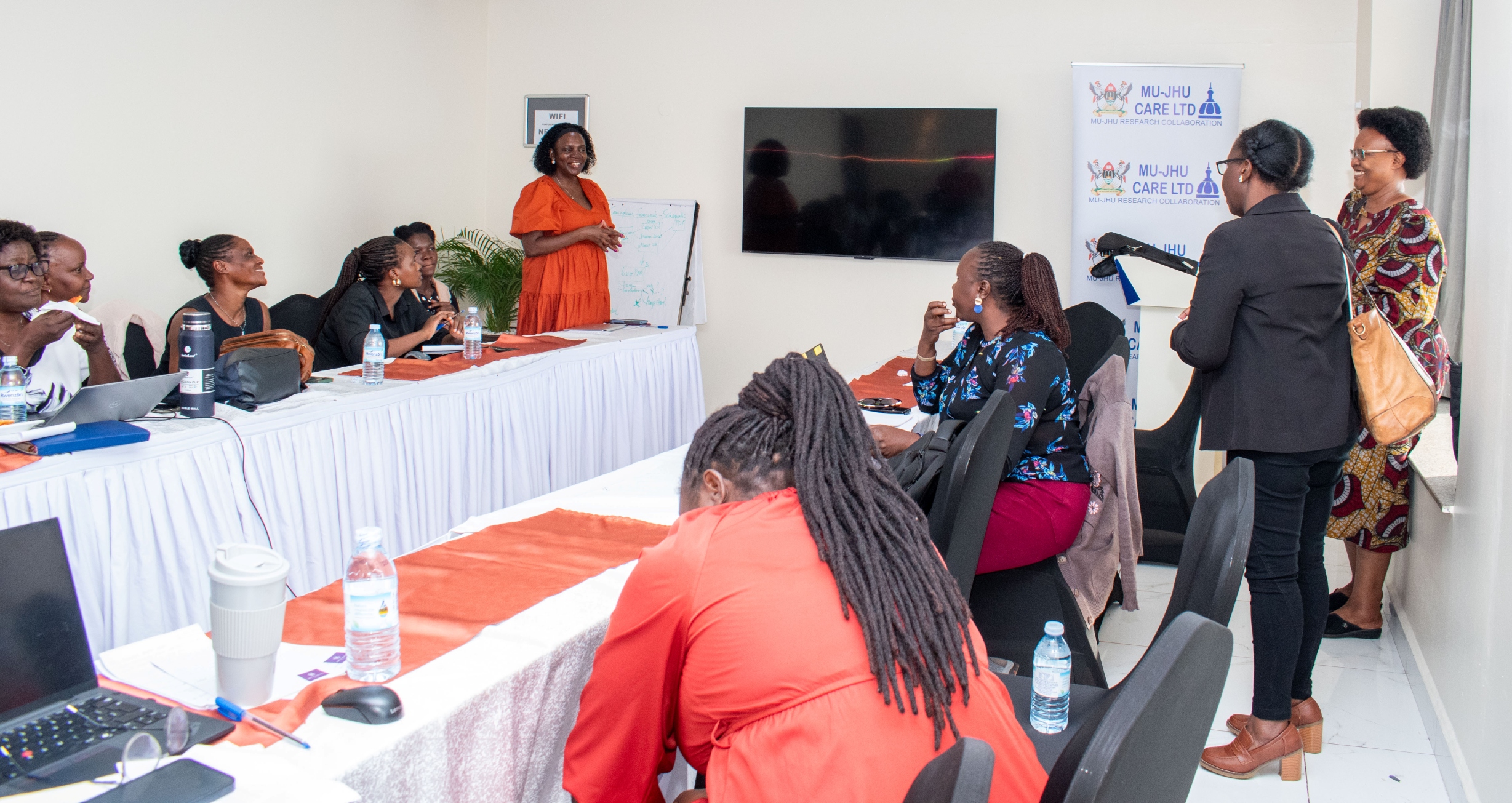
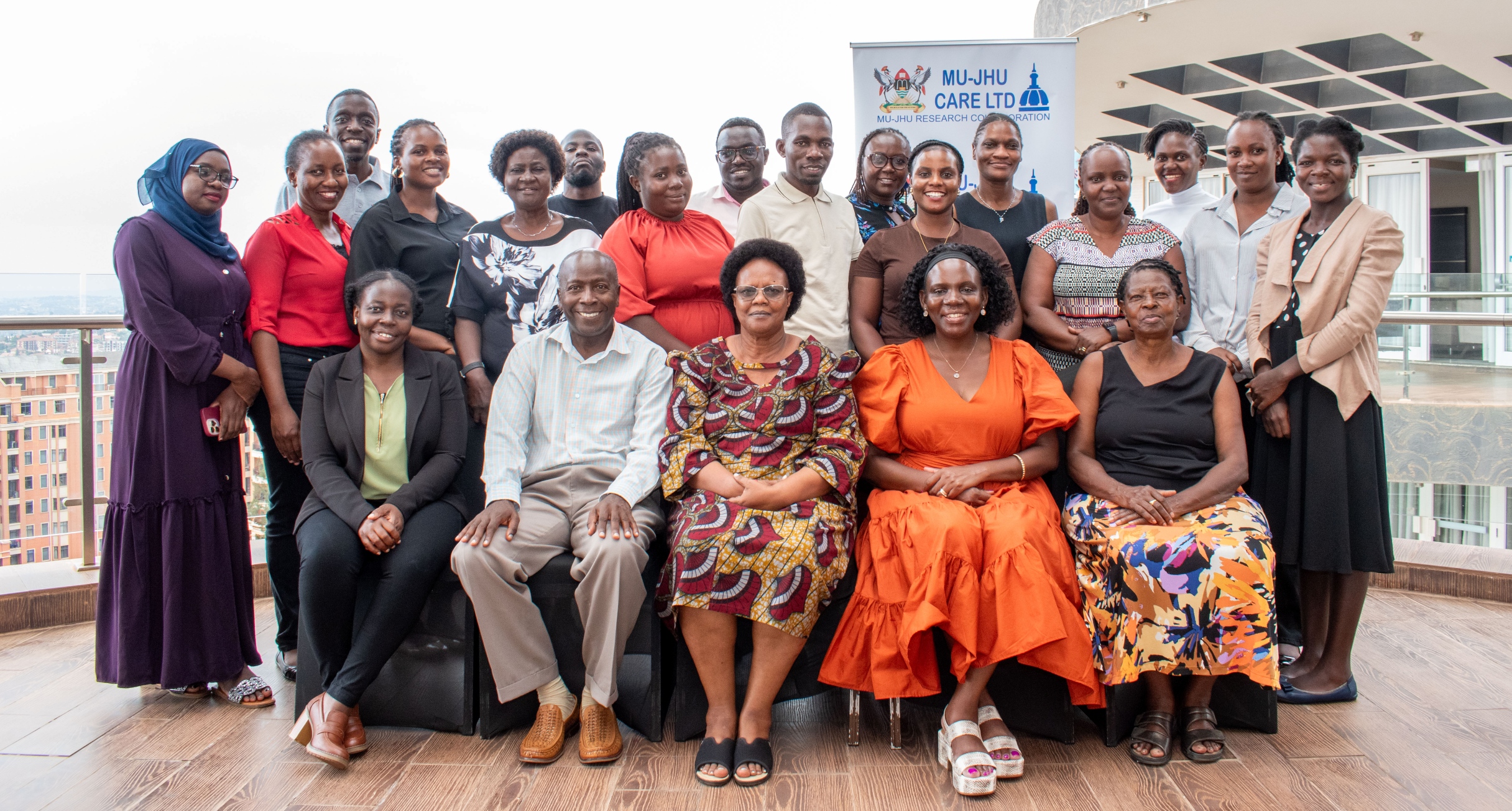
From the 15th-19th June 2026, MU-JHU held a manuscript writing workshop at Skyz Hotel Kampala. This workshop brought together staff whose work was close to publication-ready with expert facilitators drawn from some of Uganda’s leading academic institutions. This was a targeted effort to increase the number of peer-reviewed papers emerging from the institution.The workshop was organized by the Research Directorate, led by Dr. Flavia Matovu Kiweewa. Participants were selected through an expression of interest. Researchers with near-complete manuscript drafts were prioritized because the workshop was designed to sharpen the writing that communicates them. The initiative was geared towards increasing the volume and quality of peer-reviewed publications produced at MU-JHU, enhance the institution’s visibility and research profile, and build lasting scientific writing capacity among its staff and researchers.
Four facilitators led the workshop, each bringing a distinct area of specialization. Prof. Noah Kiwanuka, recognized for his expertise in quantitative research, guided participants through the precision required to write clearly about numerical methods and findings. Dr. Victoria Nankabirwa, an epidemiologist with experience across both quantitative and qualitative approaches, covered the intersection between the two methodologies. Prof. Ann Katahoire, a qualitative specialist from Makerere University’s School of Public Health, focused on the distinct conventions and challenges of qualitative manuscript writing. Dr. Irene Mutuzo delivered a dedicated session on the ethical use of artificial intelligence in research writing, which is an increasingly relevant topic as AI tools become more accessible in academic settings.
Together, the facilitators led sessions that covered every section of a research manuscript. These included writing strong introductions for both qualitative and quantitative papers, constructing rigorous methods sections, presenting results effectively through narrative, tables, figures, and visualizations, and crafting discussion sections that contextualize findings within the broader literature. Sessions on writing effective conclusions and recommendations rounded out the programme, with practical writing time and one-on-one facilitator consultations built into the schedule. A distinguishing feature of the workshop was its Rapid-Fire Presentations format. Each participant delivered a three-minute pitch of their manuscript, followed by three minutes of direct facilitator feedback. The structure was designed to ensure that every researcher left with specific, actionable guidance on their own work and not only the general principles about scientific writing. In addition to the pitches, participants developed individual publication plans, giving each researcher a clear roadmap from their current draft to journal submission.
The workshop reflects MU-JHU’s efforts in producing high-quality research. It also highlighted the importance of peer reviews during the publication cycle. It emphasized disseminations as the mechanism through which findings influence policy, reach other researchers, and contribute to the global scientific record. By targeting researchers who already have manuscripts in progress, the Research Directorate ensured that the workshop’s impact would be direct and measurable. Each participant left with a manuscript that was more polished and a clearer path to submission.
MU-JHU’s research spans HIV and AIDS, infectious diseases, maternal and child health, and health systems strengthening. Increasing the published output from these areas strengthens not only the institution’s academic standing but also the evidence base available to health practitioners and policymakers across Uganda and beyond. Feedback from participants highlighted the practical value of the sessions. For many, the workshop addressed gaps that are common even among experienced researchers, particularly in sections such as the introduction and discussion, which require both technical command and clear, logical argumentation.
“It was so educative. We felt fully engaged with our facilitators, who were really knowledgeable about both the quantitative and qualitative aspects of manuscript writing.”
~ Judith Nankabirwa, Social Scientist – MIRNA Study
“I got to know how to write the introduction and discussion sections, which I had not fully understood before.”
~ Zam Nabalwanyi, Social Scientist – MIRNA Study
