
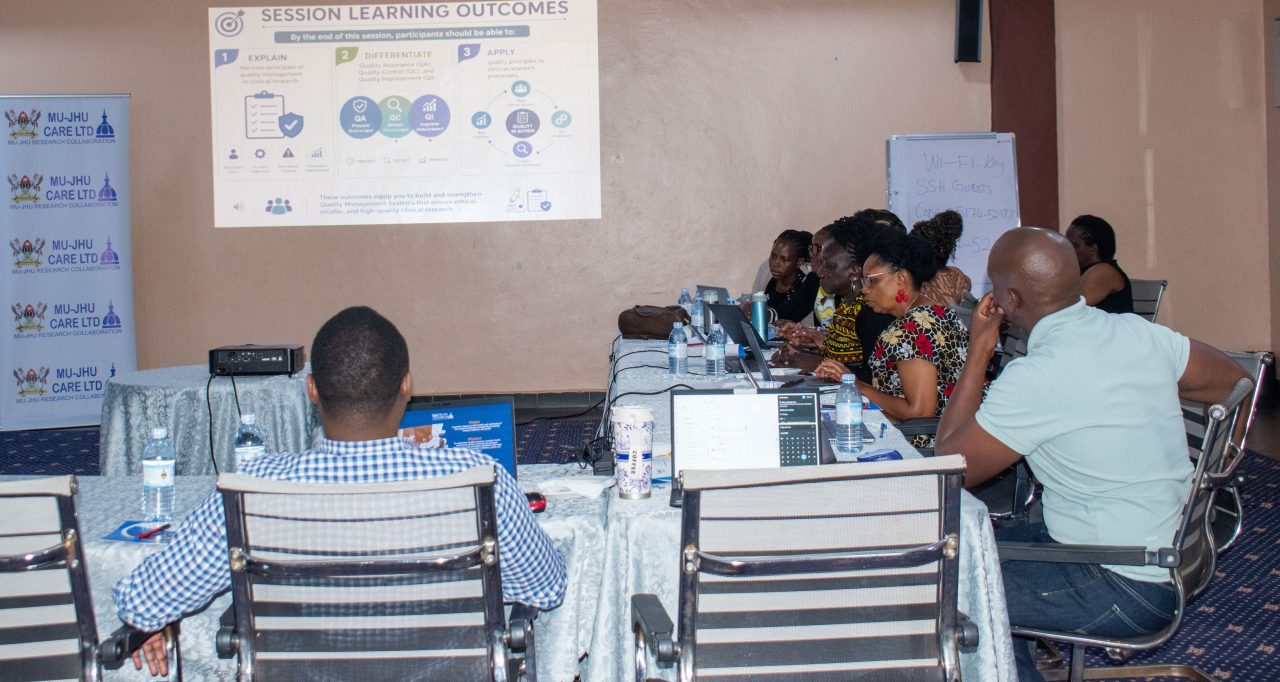
In late June (22nd -26th June 2026) , twenty MU-JHU staff members gathered at Silver Springs Bugolobi for a five-day training-of-trainers workshop. These individuals left with six comprehensive training curricula, a shared understanding of competency-based learning, and newfound confidence to develop training programs.


Facilitators Dr. Irene Esther Mutuzo and Dr. Godfrey Mayende engaged these participants about their training needs. Their response was candid and clear that the staff needed practical training that would equip them with tangible products, rather than just theoretical knowledge. They aimed to leave the workshop with complete, deliverable short-course curricula that reflected their aspirations for relevant, engaging, and effective training. A key takeaway from this initial consultation set the tone for the workshop.
Day One established the foundational concepts of curriculum design. Participants from diverse MU-JHU departments introduced themselves and learned about the essential elements of a curriculum, including outcomes, content, activities, and assessments. Using AI tools to align their course ideas with MU-JHU’s strategic priorities, the group identified six priority courses based on the institution’s genuine needs. By the end of the day, six working groups had formed, each focused on developing a specific course.
The second day shifted focus from foundational concepts to structure as participants crafted their draft competency statements into well-organized curricula. Dr. Mayende introduced Bloom’s Taxonomy, helping clarify the difference between a competency and a learning outcome. By the conclusion of Day Two, the groups had populated their templates with structured learning outcomes and session outlines that would serve as blueprints for their courses.

On Day Three, the emphasis transitioned to the personal aspect of training delivery. Participants explored adult learning principles and began creating content like slide decks and infographics, emphasizing that while AI tools could assist in the process, human oversight was crucial. As the week progressed, they practiced facilitating their course content, receiving direct feedback to refine their approaches. On Day Five, they presented their completed curricula and received constructive feedback to enhance the quality of their courses.
Eventually, participants left the workshop equipped with action plans to implement their new skills, ensuring that the transformative journey they began would continue well and bear fruit.
