
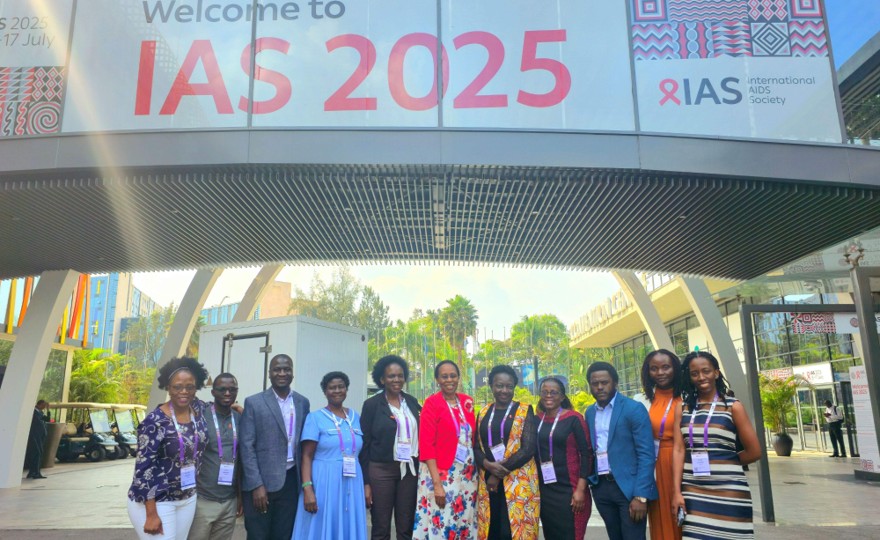
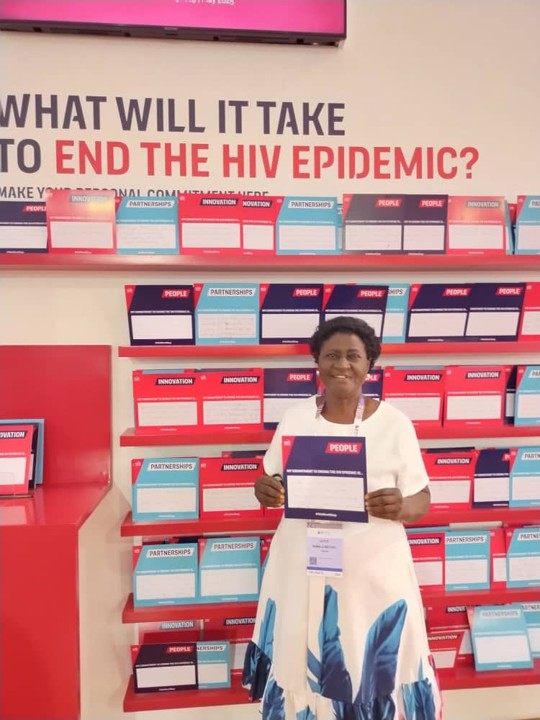

MU-JHU joined global leaders, researchers, and community advocates in Kigali for the opening of the IAS Conference 2025. Together, we reflected on four decades of progress in the HIV response while confronting today’s funding challenges. Despite these uncertainties, the conference opened with a shared determination to protect the gains made and safeguard the progress achieved over the past 40 years.
A key moment was the celebration of new WHO guidelines endorsing injectable Lenacapavir for PrEP, an important milestone in the journey toward #EndAIDS2030. Throughout the week, speakers emphasized the need for accountability to the communities most affected by the epidemic, ensuring that scientific breakthroughs reach those who need them most.
Scientific Contributions and Engagement
Led by our Executive Director, Prof. Philippa Musoke, MU-JHU actively contributed to discussions shaping the future of HIV research and care.
Juliane Etima, Director of Psychosocial Support at MU-JHU, presented a poster on behalf of the IMPAACT 2009 qualitative team. The poster, authored by Petina Musara and colleagues, explored factors influencing adherence to daily oral PrEP during pregnancy and postpartum across Malawi, South Africa, Uganda, and Zimbabwe.
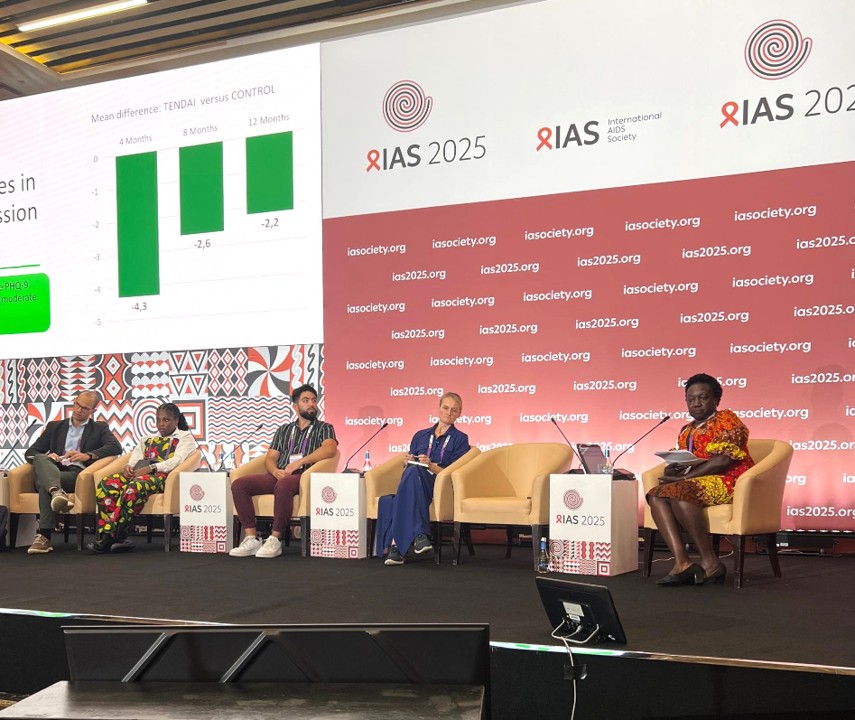
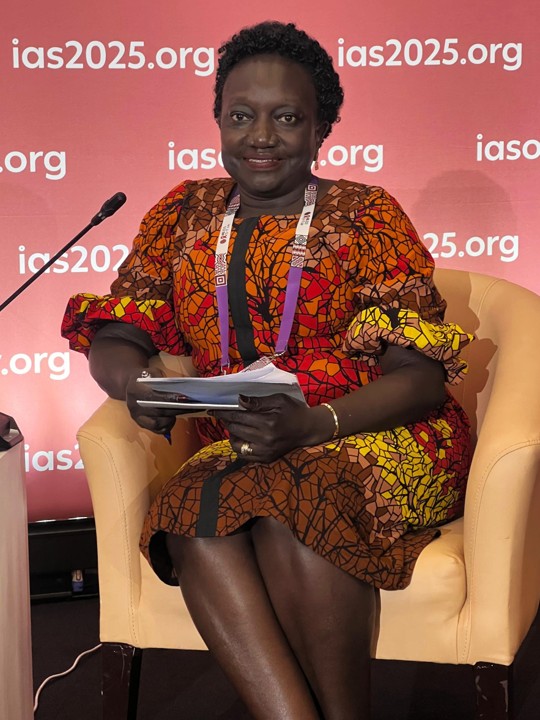
On 15 July 2025, Ms. Etima also moderated a session titled “Centering Mental Health in the HIV Response.” The session brought together global experts advancing the integration of mental health into HIV care—from screening to impactful interventions.
Reflecting on the session, she shared:
“My hope is that through this work, we will achieve better health outcomes and promote the wellbeing of people living with HIV… As Ndeahiteelela Conteh reminded us, ‘We will not end AIDS if we continue to ignore mental health.’”
Lenacapavir Brought to Life
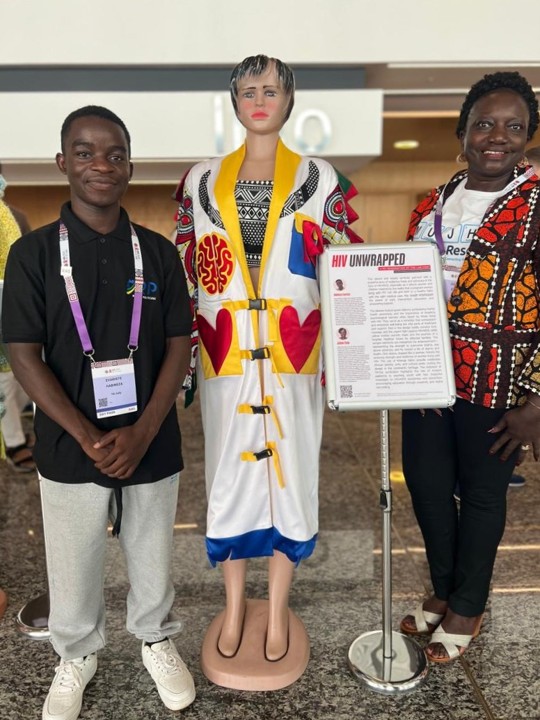
Lenacapavir’s impact resonated beyond scientific sessions. At the HIV UNWRAPPED Exhibition, the PURPOSE 1 study was transformed into a visual story through a designer lab coat, an artistic collaboration between Dr. Flavia Matovu Kiweewa and Rwandan designer Emille Ntakiyimana.
Every detail of the coat symbolized the science behind the study:
- Two buttons represented the twice-yearly injections.
- A pocket design carried the message of 100% efficacy and safety.
- An African-inspired rope motif running along the back honored the 5,338 participants who made the study possible.
This creative piece highlighted the power of merging science, storytelling, and community.
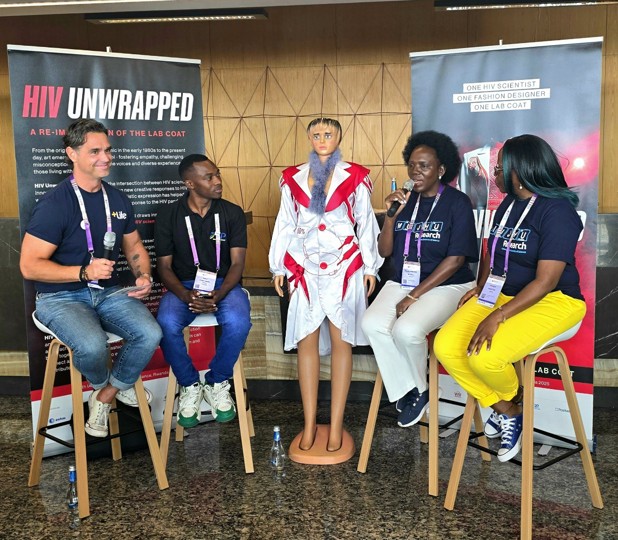
MU-JHU was also represented in another stunning UNWRAPPED collaboration by Rwandan artist Habineza Evariste and Ms. Etima. Their lab coat design honored the strength, resilience, and advocacy of women and children living with HIV—reimagining the lab coat as a symbol of hope and empowerment.
Advancing Mental Health in HIV Care
In the Social and Behavioural Sciences session, Ms. Etima delivered an oral presentation titled:“Barriers to the provision of social, emotional and educational support: Innovations for empowerment and equity for children, young people, women and families affected by HIV.” She also participated in a panel discussion, contributing to vital conversations on integrating mental health into whole-person HIV care.
IAS 2025 concluded with a strong global call to sustain momentum in the HIV response and address the challenges ahead. MU-JHU was proud to stand among partners and leaders shaping the next chapter of HIV research, prevention, and care.
