
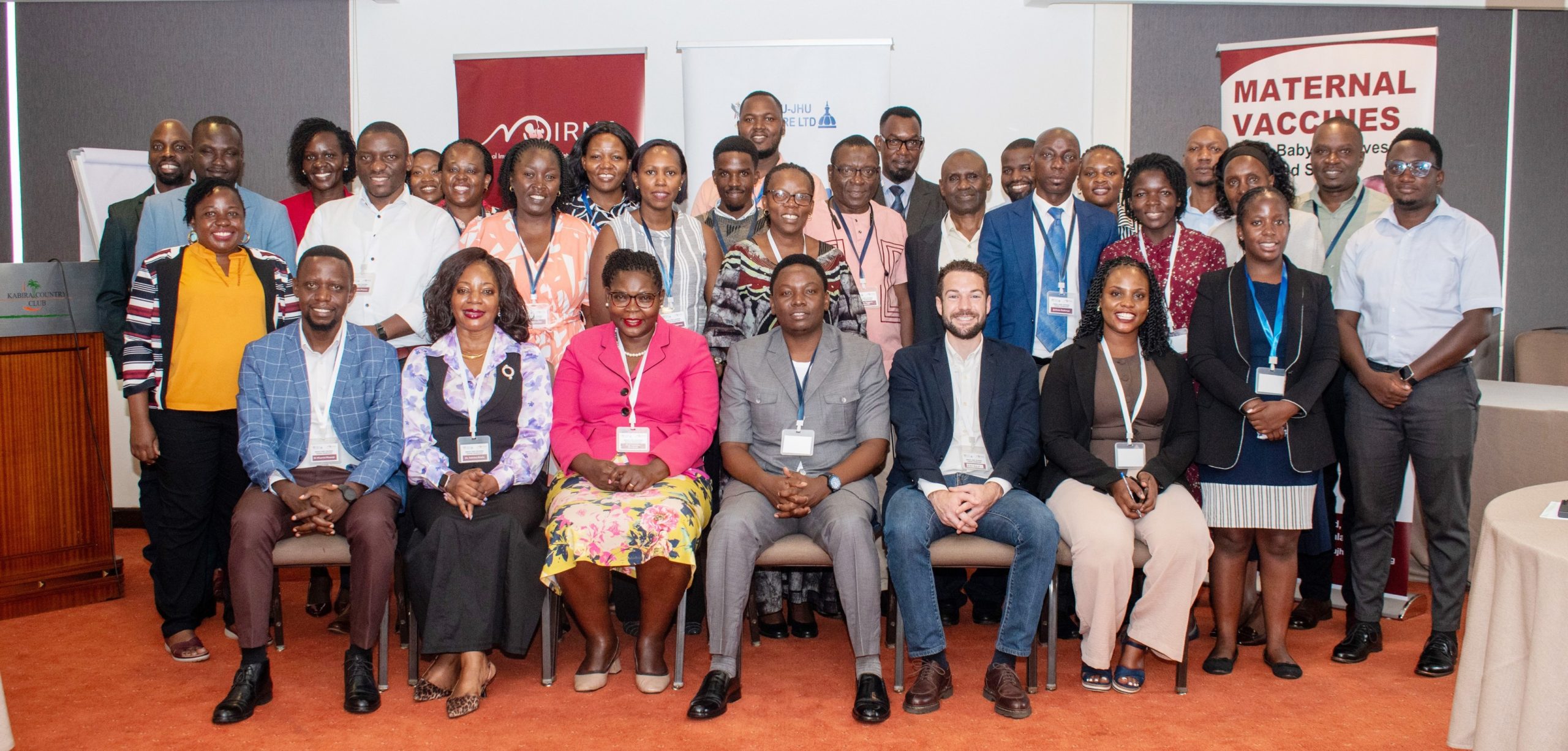
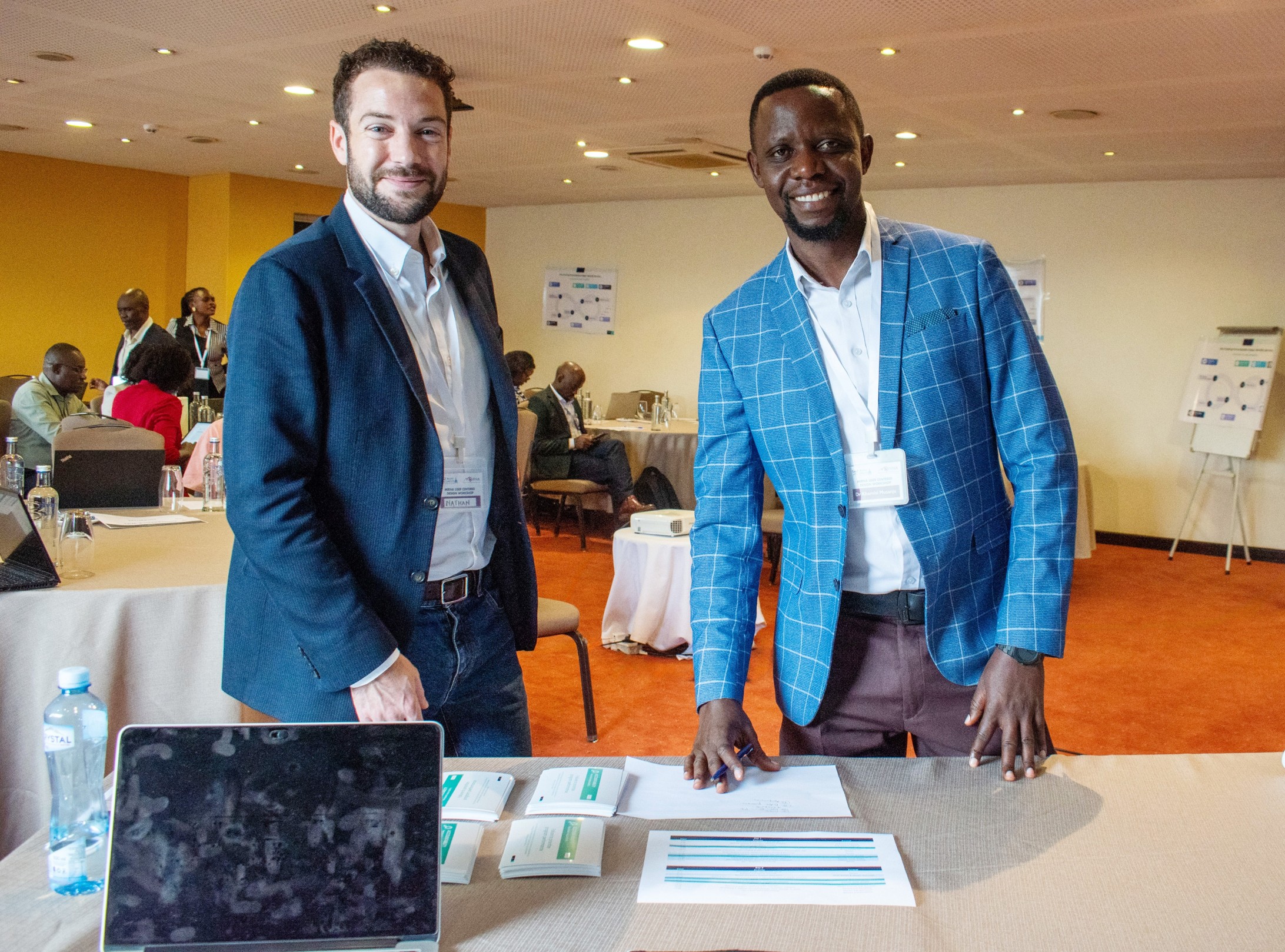
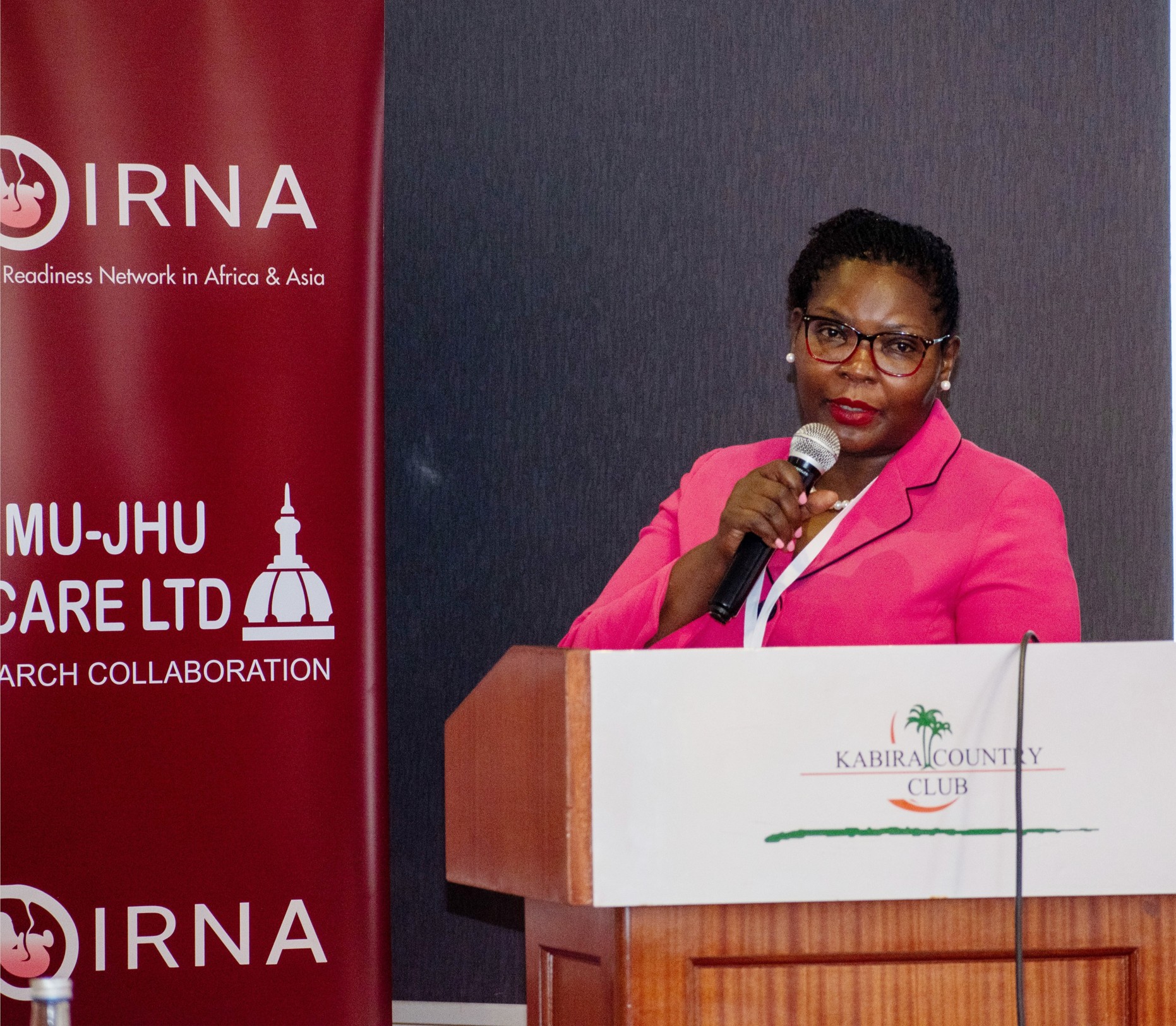
A two-day user-centered design workshop hosted by the MIRNA study in collaboration with the Ministry of Health brought together national stakeholders to support the development of Uganda’s maternal vaccine demand strategy. Facilitated by Nathan Mougin from IRIMI (an international team of public health, public policy, and social and behavioral experts) the workshop was held from 14–15 May 2026 at Kabira Country Club in Kampala.
The engagement convened policymakers, clinicians, infectious disease specialists, researchers, social and behavioral change experts, Ministry of Health maternal health teams, partners from NITAG and UNEPI, cultural institutions, PATH, and community representatives. Together, participants worked to shape a user-informed strategy aimed at strengthening maternal vaccine demand and supporting future maternal immunization rollout in Uganda.
Over the two days, participants explored barriers to introducing new maternal vaccines, refined the national problem statement, and discussed interventions to improve vaccine uptake among pregnant women. Discussions also focused on priority indicators, stakeholder roles, and the resources needed to implement the strategy.
A key highlight of the workshop was its collaborative and inclusive approach, which participants said would strengthen ownership and support long-term implementation.
MIRNA Co-Investigator Khamisi Musanje noted that the process created a strong sense of stakeholder ownership. “The approach ensured that the vaccine demand strategy was not done for us, but with us,” he said, adding that the broad representation of stakeholders would support rapid adoption of the strategy once finalized.
Participants also praised the evidence-based foundation of the discussions, particularly the use of situational analysis to guide decision-making. MIRNA Co-Investigator Dr. Eve Nakabembe commended the process for being grounded in Uganda’s realities and health system context. “Starting with a thorough presentation on situational analysis was outstanding. The entire approach has been well grounded in the realities of the country,” she said.
The workshop forms part of broader efforts to prepare Uganda for the introduction of new maternal vaccines by strengthening stakeholder alignment, building public confidence, and supporting effective maternal immunization rollout.
MIRNA Principal Investigator Professor Annette Nakimuli highlighted the significance of the initiative within a wider international collaboration focused on improving maternal and newborn health outcomes. “We are working in a consortium of countries across Africa and Asia, and each country is developing its national maternal vaccine strategy. I take pride in the fact that our research is helping mothers and babies. This is critical for public health,” she said.
Dr. Sabrina Kitaka, Paediatric Infectious Diseases Specialist at Makerere University College of Health Sciences, emphasised the broader impact of prioritising maternal health within national health systems. “When the health of a mother is prioritised, everyone is safe,”
About MIRNA
The Maternal Immunisation Readiness Network in Africa and Asia (MIRNA) is a collaborative research network working across nine countries in sub-Saharan Africa and South Asia to strengthen maternal immunisation programmes in preparation for the introduction of new life-saving vaccines aimed at improving foetal and infant health.
MIRNA supports countries to develop national readiness plans for introducing new maternal vaccines, align maternal immunisation strategies across partner countries, and contribute to global policy and implementation efforts for maternal immunisation. Maternal vaccines play a critical role in protecting mothers and infants from life-threatening infectious diseases during the most vulnerable stages of life.
